Temple Glimpse
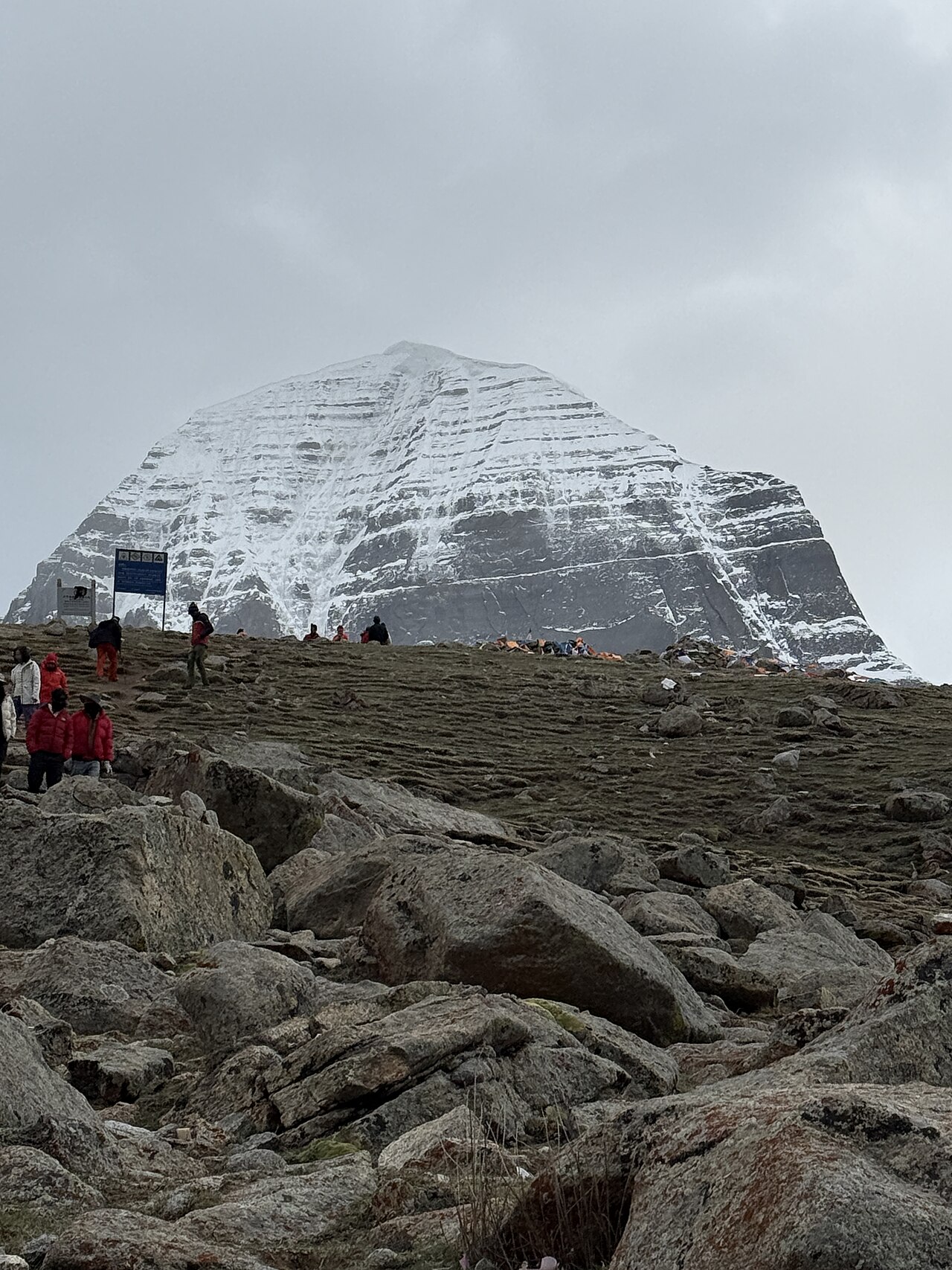
Mythology & Significance
कैलासवासिने नमः
Salutation to the One who dwells on Kailasa
Shaiva praise of Shiva’s cosmic abode
Significance in mythology
Mount Kailash is revered in Hindu cosmology as Kailasa, the abode of Shiva and Parvati. The Mahabharata and Puranas celebrate it as a cosmic axis. Jain tradition associates the region with Rishabhadeva; Tibetan Buddhist and Bon traditions also hold the mountain sacred — a rare cross-faith geography.
Pilgrimage literature treats Mount Kailash (Kailasa) as a tirtha — a crossing where devotion to Lord Shiva’s abode (Kailasa) / sacred mountain is believed to bear fruit more readily than in ordinary space. Accounts summarised here follow widely cited epic, Puranic, and regional mahatmya traditions; temple priests remain the guides for ritual detail.
Local stories & beliefs
Pilgrims perform kora / parikrama rather than summiting — climbing is forbidden and believed spiritually improper. Lake Manasarovar baths and the multi-day circuit are the lived rite.
Altitude, thin air, and silence become part of the belief that one walks the edge of the human and the divine.
Scriptural & traditional links: Shiva Purana / Kailasa lore, Mahabharata Himalayan geography, Jain and Tibetan sacred mountain traditions, Accounts summarised from widely cited Puranic, epic, and pilgrimage traditions; local tellings may differ.
Known for: Kailasa parikrama & Manasarovar
Important Days, Festivals & Best Time
Festivals & sacred days
- Saga Dawa (Tibetan calendar)
- Seasonal yatra windows (summer)
Watch & Learn
Use videos for landscape orientation only — permit and route rules must come from authorised operators.
Location on Map
Pinpoint the sacred site, then plan your approach from the nearest rail or airport listed below.
Getting There, Stay & Food
Accommodation
Basic guesthouses on kora route; organised yatra packages handle lodging.
Local food
Simple vegetarian options in yatra camps; carry personal dietary needs.
Other food options
Limited at altitude.
Nearby Places & Clubbed Packages
Same-trip places
Suggested packages
- Kailash–Manasarovar organised yatra (permit-based)
- Kathmandu staging + Kailash overland package
Practical Darshan Details
Restrictions at gates
Climbing the peak is not permitted. Photography and drone rules are strict. Respect all faiths sharing the site.
Common questions · सामान्य प्रश्न
Tap any question for a fuller pilgrim brief — mythology, season, how to reach, darshan practicals, food, and how to verify on official channels. Schedules change; always confirm before travel.
What is Mount Kailash (Kailasa) known for?
Kailasa parikrama & Manasarovar. The Himalayan peak revered as Shiva’s Kailasa — a cross-faith pilgrimage (Hindu, Buddhist, Jain, Bon) around Lake Manasarovar, not a conventional temple complex.
Where is Mount Kailash (Kailasa) located?
Ngari Prefecture, Tibet Autonomous Region, China
Who is worshipped at Mount Kailash (Kailasa)?
Lord Shiva’s abode (Kailasa) / sacred mountain
What is the mythological significance of Mount Kailash (Kailasa)?
Mount Kailash is revered in Hindu cosmology as Kailasa, the abode of Shiva and Parvati. The Mahabharata and Puranas celebrate it as a cosmic axis. Jain tradition associates the region with Rishabhadeva; Tibetan Buddhist and Bon traditions also hold the mountain sacred — a rare cross-faith geography. Local memory also notes: Pilgrims perform kora / parikrama rather than summiting — climbing is forbidden and believed spiritually improper. Lake Manasarovar baths and the multi-day circuit are the lived rite. Altitude, thin air, and silence become part of the belief that one walks the edge of the human and the divine. Traditional / scriptural links often cited: Shiva Purana / Kailasa lore, Mahabharata Himalayan geo…
When is the best time to visit Mount Kailash (Kailasa)?
Best time: Typically May–September depending on permits and weather. Winter is not a practical pilgrimage window.
Climate: Extreme high altitude — cold, thin air, rapid weather changes.
Carry: High-altitude gear, medical consultation for altitude, permits via authorised operators, layers, sun protection.
Festival weeks and weekends are busier — leave buffer for queues and parking.
How do I reach Mount Kailash (Kailasa)?
Nearest rail: Not a simple rail pilgrimage; organised overland routes from Nepal or within Tibet via authorised travel.
Nearest airport: Regional Tibet airports on organised routes; many groups stage via Kathmandu / Lhasa depending on itinerary.
Map search tip: Mount Kailash Tibet.
Last-mile roads, seasonal closures, and local transport change — confirm before you set out.
Which festivals are important at Mount Kailash (Kailasa)?
Widely noted observances linked to this shrine include: Saga Dawa (Tibetan calendar), Seasonal yatra windows (summer).
Exact dates follow the lunar / temple calendar and can shift each year. Use the temple’s official notices for the final schedule.
What should visitors know for darshan at Mount Kailash (Kailasa)?
Dress code: Cold-weather modest clothing. This is a sacred landscape — behave as at a temple throughout the kora.
Darshan timings: Seasonal access only. Parikrama is multi-day; there is no single ‘darshan slot’ like a plains temple.
Special entry / passes: Chinese/Tibet travel permits and group rules are mandatory — book only through authorised agencies. Rules change often.
Gate restrictions: Climbing the peak is not permitted. Photography and drone rules are strict. Respect all faiths sharing the site.
Lockers / cloakroom: Not applicable in the usual sense — travel with organised logistics.
Phone, leather, and photography rules are set by the temple board — follow what is posted at the gate.
Sources & Updates
- Authorised Tibet / Nepal yatra operators
- Public pilgrimage advisories
Photo: JonaliB · CC BY-SA 4.0 · Wikimedia Commons
Last updated: 2026-07-30. Access is highly regulated. TirthaYatra does not arrange permits; verify every rule with authorised operators and current government advisories.
Feedback · सुधार
Help us validate this page: suggest a correction, add a detail, or highlight something useful for home puja readers.
Feedback is emailed to TirthaYatra for editorial review. It is not published live automatically (safer for quality and ads policy). You can also keep a personal copy on this device.