Temple Glimpse
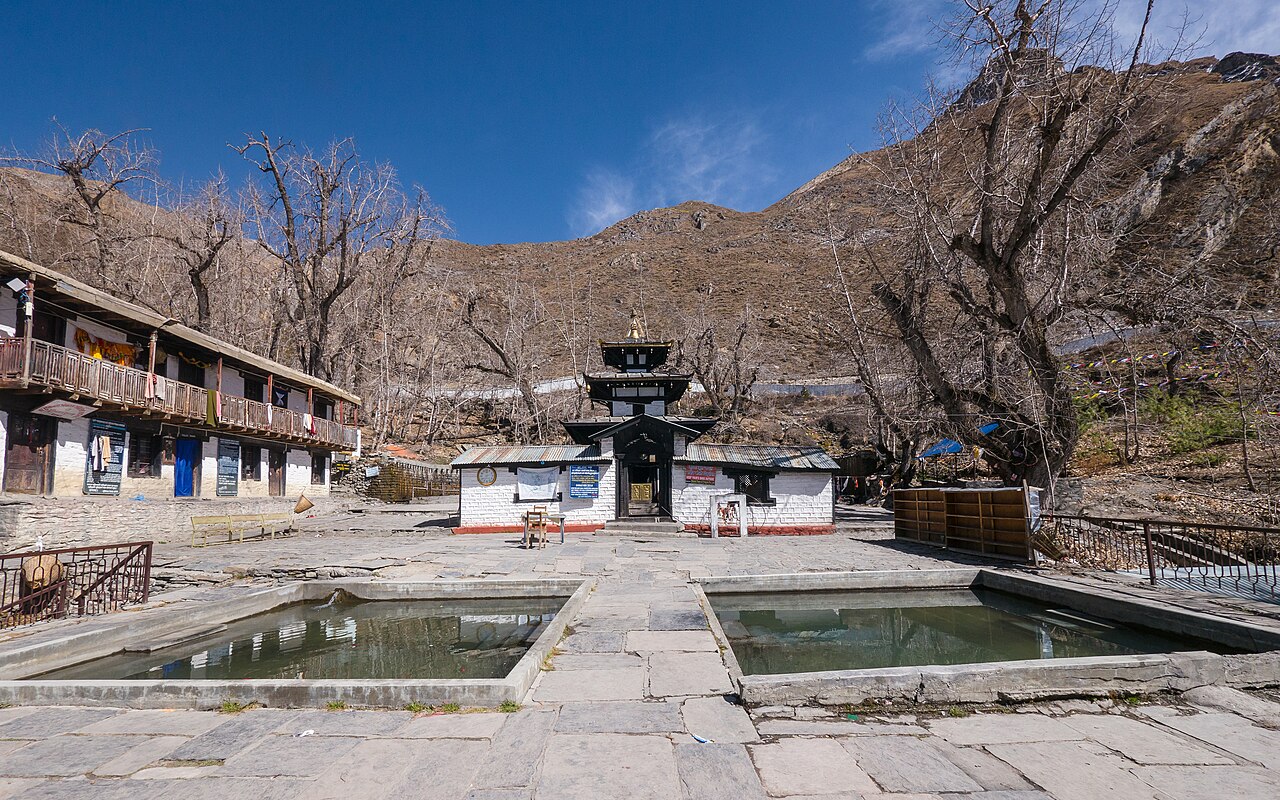
Mythology & Significance
मुक्तिनाथाय नमः
Salutation to the Lord of Liberation
Name-theology of the Mustang mukti tirtha
Significance in mythology
Muktinath in Mustang is a high Himalayan tirtha of liberation (mukti), sacred to both Hindus and Buddhists. In Shakti Peetha enumerations it is also remembered as the Gandaki peetha. Vaishnava and Himalayan Buddhist geographies meet here.
Pilgrimage literature treats Muktinath Temple as a tirtha — a crossing where devotion to Lord Vishnu (Muktinath) / Shiva-Shakti traditions is believed to bear fruit more readily than in ordinary space. Accounts summarised here follow widely cited epic, Puranic, and regional mahatmya traditions; temple priests remain the guides for ritual detail.
Local stories & beliefs
Bathing under the 108 water spouts and visiting the eternal flame shrine are core pilgrim acts. Hindus and Buddhists share the precinct with distinct yet coexisting ritual styles.
Altitude and wind are read as purifying forces on the path to mukti.
First-time visitors often hear several versions of the same story from pandas, taxi guides, and elderly pilgrims — a reminder that local belief is living conversation, not a single fixed text.
Scriptural & traditional links: Vaishnava mukti-tirtha tradition, Shakti Peetha (Gandaki) lists, Himalayan Buddhist sacred geography, Accounts summarised from widely cited Puranic, epic, and pilgrimage traditions; local tellings may differ.
Known for: 108 water spouts & dual faith shrine
Important Days, Festivals & Best Time
Festivals & sacred days
- Janai Purnima / regional fairs
- Local Mustang festival calendar
Watch & Learn
Trek/jeep approach videos help with planning altitude and weather.
Location on Map
Pinpoint the sacred site, then plan your approach from the nearest rail or airport listed below.
Getting There, Stay & Food
Accommodation
Teahouses and lodges in Ranipauwa / Muktinath area; book in peak trekking seasons.
Local food
Dal-bhat, Tibetan-influenced vegetarian meals, tea-house food.
Other food options
Limited; stick to busy kitchens at altitude.
Nearby Places & Clubbed Packages
Same-trip places
Suggested packages
- Pokhara–Jomsom–Muktinath — 3–5 days
- Kathmandu + Muktinath Nepal yatra — 6–8 days
Practical Darshan Details
Restrictions at gates
Respect both Hindu and Buddhist ritual spaces. Drones often restricted.
Common questions · सामान्य प्रश्न
Tap any question for a fuller pilgrim brief — mythology, season, how to reach, darshan practicals, food, and how to verify on official channels. Schedules change; always confirm before travel.
What is Muktinath Temple known for?
108 water spouts & dual faith shrine. A high Himalayan tirtha sacred to both Hindus and Buddhists — linked to liberation (mukti) and often woven into Nepal–India pilgrimage circuits.
Where is Muktinath Temple located?
Mustang District, Nepal, Gandaki Province
Who is worshipped at Muktinath Temple?
Lord Vishnu (Muktinath) / Shiva-Shakti traditions
What is the mythological significance of Muktinath Temple?
Muktinath in Mustang is a high Himalayan tirtha of liberation (mukti), sacred to both Hindus and Buddhists. In Shakti Peetha enumerations it is also remembered as the Gandaki peetha. Vaishnava and Himalayan Buddhist geographies meet here. Local memory also notes: Bathing under the 108 water spouts and visiting the eternal flame shrine are core pilgrim acts. Hindus and Buddhists share the precinct with distinct yet coexisting ritual styles. Altitude and wind are read as purifying forces on the path to mukti. First-time visitors often hear several versions of the same story from pandas, taxi guides, and elderly pilgrims — a reminder that local belief is living conversation, not a single fixed text. Traditional /…
When is the best time to visit Muktinath Temple?
Best time: March–May and September–November. Winter access can be harsh; monsoon landslides possible.
Climate: High-altitude cold desert influence; strong sun, cold nights.
Carry: Warm layers, altitude awareness, permits as required for Mustang, water, ID/passport.
Festival weeks and weekends are busier — leave buffer for queues and parking.
How do I reach Muktinath Temple?
Nearest rail: No rail; approach via Pokhara then road/flight toward Jomsom.
Nearest airport: Jomsom (weather-dependent) or Pokhara as main gateway.
Map search tip: Muktinath Temple Mustang Nepal.
Last-mile roads, seasonal closures, and local transport change — confirm before you set out.
Which festivals are important at Muktinath Temple?
Widely noted observances linked to this shrine include: Janai Purnima / regional fairs, Local Mustang festival calendar.
Exact dates follow the lunar / temple calendar and can shift each year. Use the temple’s official notices for the final schedule.
What should visitors know for darshan at Muktinath Temple?
Dress code: Warm modest clothing. Temple footwear rules apply.
Darshan timings: Daytime access typical; weather and local custom matter more than clock hours.
Special entry / passes: Restricted-area permits may apply for parts of Mustang — check Nepal immigration / tourism rules.
Gate restrictions: Respect both Hindu and Buddhist ritual spaces. Drones often restricted.
Lockers / cloakroom: Not typical — hotels hold luggage in Pokhara/Jomsom.
Phone, leather, and photography rules are set by the temple board — follow what is posted at the gate.
Sources & Updates
- Nepal Tourism Board
- Local Mustang administration / permit notices
Photo: Faj2323 · CC BY-SA 4.0 · Wikimedia Commons
Last updated: 2026-07-30. Mustang permit rules and flight reliability change — verify before booking.
Feedback · सुधार
Help us validate this page: suggest a correction, add a detail, or highlight something useful for home puja readers.
Feedback is emailed to TirthaYatra for editorial review. It is not published live automatically (safer for quality and ads policy). You can also keep a personal copy on this device.