Temple Glimpse
Mythology & Significance
जम्बुकेश्वराय नमः
Salutation to Jambukeswara — Shiva of the water lingam
Name-mantra of the Appu (water) Pancha Bhuta Sthalam
Significance in mythology
Jambukeswarar at Thiruvanaikaval is the water (Appu) element among the Pancha Bhuta Sthalams of Tamil Shaivism. Tevaram hymns and sthala purana describe an underground spring beneath the lingam and Parvati’s penance as Akhilandeshwari.
Pilgrimage literature treats Jambukeswarar Temple as a tirtha — a crossing where devotion to Lord Shiva (Appu Lingam — Water) is believed to bear fruit more readily than in ordinary space. Accounts summarised here follow widely cited epic, Puranic, and regional mahatmya traditions; temple priests remain the guides for ritual detail.
Local stories & beliefs
The ever-moist lingam is shown as proof of the water element’s living presence. Paired darshan with Srirangam across the Kaveri is a classic Trichy belief-circuit.
Strict South Indian dress norms are treated as part of elemental temple discipline.
First-time visitors often hear several versions of the same story from pandas, taxi guides, and elderly pilgrims — a reminder that local belief is living conversation, not a single fixed text.
Scriptural & traditional links: Tevaram hymns, Pancha Bhuta Shaiva tradition, Tamil sthala purana, Accounts summarised from widely cited Puranic, epic, and pilgrimage traditions; local tellings may differ.
Known for: Appu Lingam (water element)
Important Days, Festivals & Best Time
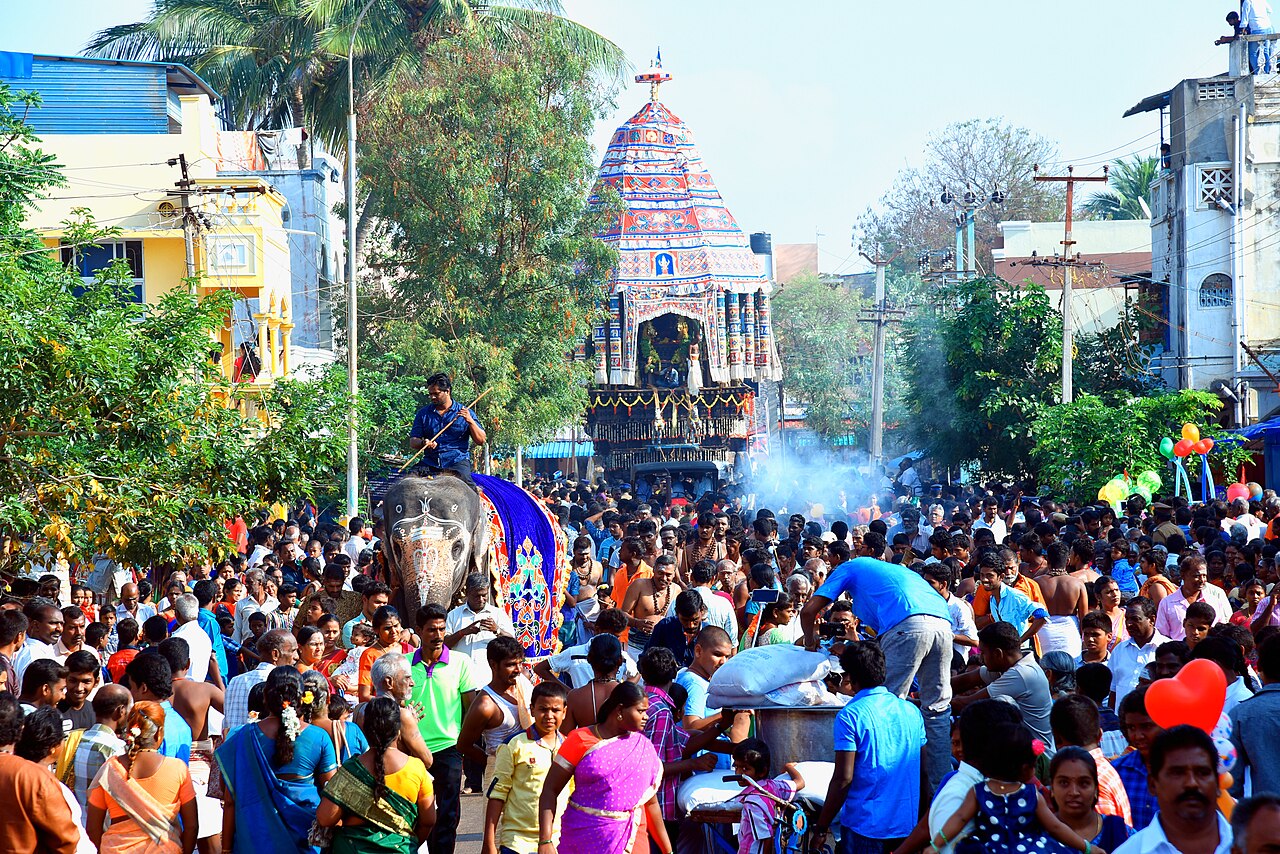
Festivals & sacred days
- Panguni / temple car festivals
- Maha Shivaratri
- Akhilandeshwari processions
Watch & Learn
Temple complex orientation — check dress rules before you go.
Location on Map
Pinpoint the sacred site, then plan your approach from the nearest rail or airport listed below.
Getting There, Stay & Food
Accommodation
Hotels in Trichy city; pilgrim lodges near Srirangam / Thiruvanaikaval.
Local food
Tamil Brahmin meals, filter coffee, temple prasadam; banana-leaf lunches nearby.
Other food options
Trichy city has multi-cuisine; temple streets stay traditional.
Nearby Places & Clubbed Packages
Same-trip places
Suggested packages
- Trichy temple day (Srirangam + Jambukeswarar + Rockfort)
- Pancha Bhuta mini-circuit (plan multi-day TN)
Practical Darshan Details
Restrictions at gates
Mobiles and leather items usually barred inside — use cloakroom. Photography often banned in sanctum.
Official trust / tourism website ↗
State / board reference: TN HR&CE Department ↗
Common questions · सामान्य प्रश्न
Tap any question for a fuller pilgrim brief — mythology, season, how to reach, darshan practicals, food, and how to verify on official channels. Schedules change; always confirm before travel.
What is Jambukeswarar Temple known for?
Appu Lingam (water element). The water element among the Pancha Bhuta Sthalams — an underground spring beneath the lingam, with distinctive South Indian dress and ritual norms.
Where is Jambukeswarar Temple located?
Thiruvanaikaval, Tiruchirappalli, Tamil Nadu, India
Who is worshipped at Jambukeswarar Temple?
Lord Shiva (Appu Lingam — Water)
What is the mythological significance of Jambukeswarar Temple?
Jambukeswarar at Thiruvanaikaval is the water (Appu) element among the Pancha Bhuta Sthalams of Tamil Shaivism. Tevaram hymns and sthala purana describe an underground spring beneath the lingam and Parvati’s penance as Akhilandeshwari. Local memory also notes: The ever-moist lingam is shown as proof of the water element’s living presence. Paired darshan with Srirangam across the Kaveri is a classic Trichy belief-circuit. Strict South Indian dress norms are treated as part of elemental temple discipline. First-time visitors often hear several versions of the same story from pandas, taxi guides, and elderly pilgrims — a reminder that local belief is living conversation, not a single fixed text. Traditional / scr…
When is the best time to visit Jambukeswarar Temple?
Best time: November–February. Summers are very hot in Trichy.
Climate: Hot tropical plains.
Carry: Dhoti/saree for sanctum norms, cotton clothes, water, ID.
Festival weeks and weekends are busier — leave buffer for queues and parking.
How do I reach Jambukeswarar Temple?
Nearest rail: Tiruchirappalli Junction.
Nearest airport: Tiruchirappalli International Airport.
Map search tip: Jambukeswarar Temple Thiruvanaikaval.
Last-mile roads, seasonal closures, and local transport change — confirm before you set out.
Which festivals are important at Jambukeswarar Temple?
Widely noted observances linked to this shrine include: Panguni / temple car festivals, Maha Shivaratri, Akhilandeshwari processions.
Exact dates follow the lunar / temple calendar and can shift each year. Use the temple’s official notices for the final schedule.
What should visitors know for darshan at Jambukeswarar Temple?
Dress code: Strict traditional norms common: men — dhoti (veshti), often bare-chested for inner areas; women — saree preferred. Western clothes may be restricted for sanctum entry. Rent/buy dhoti near temple if needed.
Darshan timings: Early morning to night with midday closure typical of TN temples. Confirm daily board timings.
Special entry / passes: Special entrance tickets when offered at official counters only.
Gate restrictions: Mobiles and leather items usually barred inside — use cloakroom. Photography often banned in sanctum.
Lockers / cloakroom: Cloakrooms for phones, bags, belts near entrance.
Phone, leather, and photography rules are set by the temple board — follow what is posted at the gate.
Sources & Updates
- TN HR&CE Department: https://hrce.tn.gov.in/hrcehome/
- TN HR&CE
- Tamil Nadu Tourism
Photo: Chandruclicks · CC BY-SA 4.0 · Wikimedia Commons
Last updated: 2026-07-30. Dress-code enforcement is real here — prepare traditional attire.
Feedback · सुधार
Help us validate this page: suggest a correction, add a detail, or highlight something useful for home puja readers.
Feedback is emailed to TirthaYatra for editorial review. It is not published live automatically (safer for quality and ads policy). You can also keep a personal copy on this device.