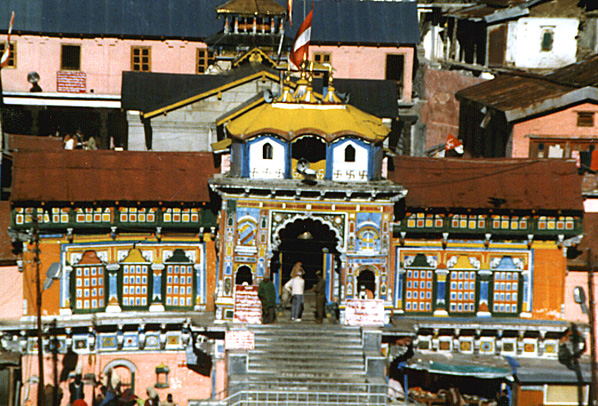
Temple Glimpse
Mythology & Significance
ॐ नमो भगवते वासुदेवाय
Om, salutation to the Blessed Vasudeva
Dwadasakshari mantra of Vaishnava Badri devotion
Significance in mythology
Badrinath is the Himalayan Vishnu seat of Adi Shankaracharya’s Char Dham and also belongs to the Uttarakhand Chota Char Dham. Classical tradition associates the site with Nar-Narayan meditation and Vishnu’s presence in the Badri forest. Shankaracharya’s digvijaya narratives credit him with establishing the living pilgrimage and monastic order connected to the shrine.
Local stories & beliefs
Garhwal belief holds that the deity ‘resides’ at Badrinath in the open season and moves to Joshimath for winter worship — a seasonal theology shared with other high Himalayan dhams. Mana village, Vyas Gufa, and related spots are woven into local Mahabharata and sage lore.
Pilgrims often combine Badrinath with Kedarnath, treating the dual Vishnu–Shiva Himalayan yatra as a complete spiritual circuit.
Scriptural & traditional links: Vishnu Purana / Nar-Narayan traditions, Skanda Purana Badri mahatmya lore, Shankara digvijaya pilgrimage traditions, Accounts summarised from widely cited Puranic, epic, and pilgrimage traditions; local tellings may differ.
Known for: Seasonal Himalayan Char Dham
Important Days, Festivals & Best Time
Festivals & sacred days
- Temple opening (spring)
- Closing for winter (deity moves to Joshimath)
- Mata Murti Ka Mela
Watch & Learn
Seasonal town and temple approach overview.
Location on Map
Pinpoint the sacred site, then plan your approach from the nearest rail or airport listed below.
Getting There, Stay & Food
Accommodation
Temple committee and GMVN rooms, plus private hotels in Badrinath town — book ahead in peak season.
Local food
Simple vegetarian Garhwali / North Indian pilgrim food; prasadam.
Other food options
Limited; stick to sealed water and busy kitchens at altitude.
Nearby Places & Clubbed Packages
Same-trip places
Suggested packages
- Full Uttarakhand Char Dham — 10–14 days
- Badrinath–Kedarnath dual yatra — 6–8 days
Practical Darshan Details
Restrictions at gates
Respect plastic bans and fragile mountain ecology. Follow VIP / queue notices only from official counters.
Official trust / tourism website ↗
State / board reference: Shri Badrinath–Kedarnath Temple Committee ↗
Common questions · सामान्य प्रश्न
Tap any question for a fuller pilgrim brief — mythology, season, how to reach, darshan practicals, food, and how to verify on official channels. Schedules change; always confirm before travel.
What is Badrinath Temple known for?
Seasonal Himalayan Char Dham. The Himalayan Vishnu dham of the Char Dham circuit, open seasonally, with deep ties to Adi Shankaracharya’s tradition.
Where is Badrinath Temple located?
Chamoli district, Uttarakhand, India
Who is worshipped at Badrinath Temple?
Lord Vishnu (Badrinarayan)
What is the mythological significance of Badrinath Temple?
Badrinath is the Himalayan Vishnu seat of Adi Shankaracharya’s Char Dham and also belongs to the Uttarakhand Chota Char Dham. Classical tradition associates the site with Nar-Narayan meditation and Vishnu’s presence in the Badri forest. Shankaracharya’s digvijaya narratives credit him with establishing the living pilgrimage and monastic order connected to the shrine. Local memory also notes: Garhwal belief holds that the deity ‘resides’ at Badrinath in the open season and moves to Joshimath for winter worship — a seasonal theology shared with other high Himalayan dhams. Mana village, Vyas Gufa, and related spots are woven into local Mahabharata and sage lore. Pilgrims often combine Badrinath with Kedarnath, tr…
When is the best time to visit Badrinath Temple?
Best time: May–June and September–October. Closed in deep winter.
Climate: High-altitude cold; sudden weather shifts common.
Carry: Woolens, rain protection, altitude awareness meds if advised by your doctor, ID, offline maps.
Festival weeks and weekends are busier — leave buffer for queues and parking.
How do I reach Badrinath Temple?
Nearest rail: Rishikesh / Haridwar, then long road journey via Joshimath.
Nearest airport: Dehradun; limited helicopter options in Char Dham season.
Map search tip: Badrinath Temple Uttarakhand.
Last-mile roads, seasonal closures, and local transport change — confirm before you set out.
Which festivals are important at Badrinath Temple?
Widely noted observances linked to this shrine include: Temple opening (spring), Closing for winter (deity moves to Joshimath), Mata Murti Ka Mela.
Exact dates follow the lunar / temple calendar and can shift each year. Use the temple’s official notices for the final schedule.
What should visitors know for darshan at Badrinath Temple?
Dress code: Warm modest clothing. Footwear off in temple. No South-Indian-style dhoti mandate.
Darshan timings: Seasonal schedule with morning and evening aartis. Winter worship continues at Joshimath.
Special entry / passes: Online / counter systems vary by year under temple committee rules.
Gate restrictions: Respect plastic bans and fragile mountain ecology. Follow VIP / queue notices only from official counters.
Lockers / cloakroom: Small cloak facilities near temple approaches; travel light.
Phone, leather, and photography rules are set by the temple board — follow what is posted at the gate.
Sources & Updates
- Shri Badrinath–Kedarnath Temple Committee: https://badrinath-kedarnath.gov.in/
- Badrinath-Kedarnath Temple Committee
- Uttarakhand Tourism
- Uttarakhand Tourism: https://uttarakhandtourism.gov.in/
Photo: The original uploader was Priyanath at English Wikipedia. · CC BY-SA 3.0 · Wikimedia Commons
Last updated: 2026-07-30. Opening/closing dates and road status change yearly — confirm before booking.
Feedback · सुधार
Help us validate this page: suggest a correction, add a detail, or highlight something useful for home puja readers.
Feedback is emailed to TirthaYatra for editorial review. It is not published live automatically (safer for quality and ads policy). You can also keep a personal copy on this device.