Parvati & Shiva
Parvati Ji’s tapasya for Shiva Ji is remembered as the archetype of steadfast partnership — strength that chooses devotion over ease.
करवा चौथ
Karva Chauth: meaning, story frame, and practical celebration notes for home and temple — written for clear learning across India and the diaspora. A sunrise-to-moonrise fast of married love — sieve, moon, and a vow for a spouse’s long life.
करवा चौथ भारत की सर्वाधिक खोजी जाने वाली स्त्री व्रतों में है। विवाहिताएँ प्रायः निर्जला व्रत रखती हैं और चंद्र दर्शन–अर्घ्य के बाद पारण करती हैं।
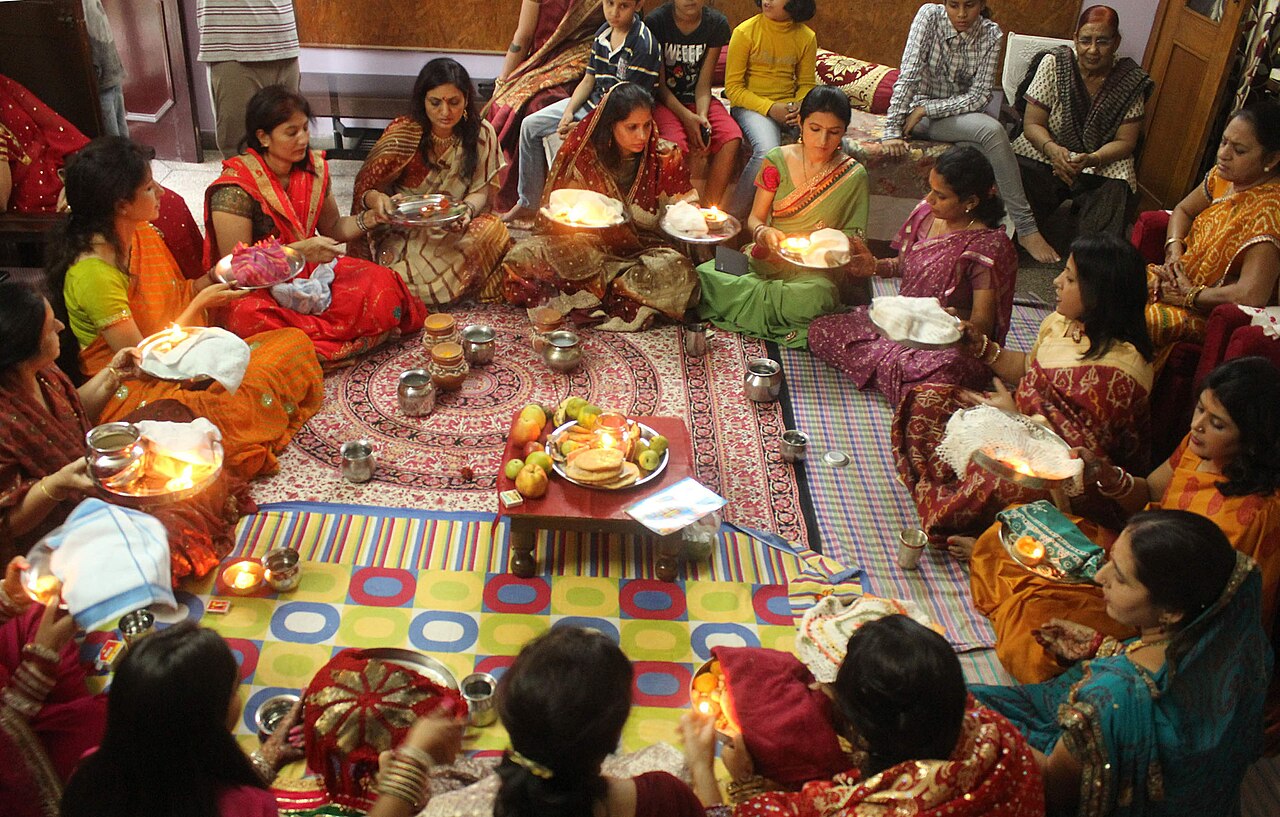
Karva Chauth is observed in Hindu calendars as a day (or season) that renews a specific devotional intent — gratitude, vow-keeping, seasonal change, or remembrance of a deity’s deed. On TirthaYatra we explain the meaning in plain language so home practitioners and temple visitors share a common frame before rituals begin. Karva Chauth (Karaka Chaturthi) is among India’s most searched women’s vrats. Married women (and increasingly partners who join in solidarity) keep a day-long fast, often without water, until the moon is sighted. The evening ritual — viewing the moon through a sieve, offering arghya, and then breaking the fast — has become a cultural icon across North India and the diaspora. Exact tithi and regional names vary; use a trusted panchang for your city, then follow the custom of your family or temple. The spiritual thread is continuity: marking sacred time with awareness rather than rushing through empty form.
लोककथाओं में रानी वीरावती का उल्लेख है — अधूरे व्रत से संकट, पूर्ण श्रद्धा से रक्षा। दूसरी धारा पार्वती जी की शिव जी हेतु तप और करवा (मटकी) को गृह–सौभाग्य का चिह्न मानती है। व्रत का हृदय दिखावा नहीं — धैर्य और प्रेम की प्रार्थना है।
Traditional tellings linked to Karva Chauth usually connect a deity’s compassion, a devotee’s vow, or a cosmic episode remembered through epic and Puranic memory. Households retell a short version before lamp-lighting or fasting; temples may stage longer katha, bhajan, or drama. Popular tellings weave two strands. One remembers Queen Veeravati, who broke her fast too early when a false moon was shown and saw calamity until the vow was completed with faith. Another strand links the day to Parvati Ji’s austerities for Shiva Ji, and to the karva (earthen pot) as a symbol of household continuity. The heart of the observance is not spectacle: it is a public, patient prayer that love should outlast fear. Versions differ by region and lineage. TirthaYatra’s retelling is an original learning summary for cultural understanding — not a verbatim scripture reprint, and not a substitute for your family priest or temple board.
पुराण–लोक परंपरा में यह व्रत कार्तिक की दीप–ऋतु और सौभाग्य से जुड़ता है। चंद्र साक्षी; छलनी अधीरता का निवारण। स्वास्थ्य पहले — कई घर चिकित्सकीय सलाह से व्रत ढालते हैं, भाव वही रखते हैं।
Mythologically, Karva Chauth sits inside wider Hindu sacred geography and time: deities, avatars, and seasonal goddess cycles that communities map onto the lunar calendar. The same festival can emphasise different deities or local heroes depending on state, language, and sampradaya. Mythologically the vow sits near Kartik’s season of lamps and fidelity. The moon (Chandra) is treated as witness; the sieve reminds devotees to filter haste and illusion. Family priests emphasise that the katha is heard after puja, and that health comes before harshness — many modern households adapt the fast with medical guidance while keeping the prayer intact. What stays stable is the ethic: purify intention, honour the deity associated with the day, share prasadam or charity where custom allows, and keep vows without harming health or neighbours.
Parvati Ji’s tapasya for Shiva Ji is remembered as the archetype of steadfast partnership — strength that chooses devotion over ease.
Moonrise ends the fast; arghya to Chandra marks the vow’s completion under the night sky.
अमेरिका, ब्रिटेन, कनाडा, खाड़ी और ऑस्ट्रेलिया में मंदिर संघ चंद्रोदय समय संग सामुदायिक कार्यक्रम रखते हैं। छलनी और दीपक प्रवासी थैली में भी यात्रा करते हैं।
Outside India, Karva Chauth is often adapted to weekend schedules, school calendars, and community hall bookings. Associations in the USA, UK, Canada, Gulf, and Southeast Asia host evening programs so working families can participate after office hours. In the US, UK, Canada, Gulf, and Australia, temple associations host Karva Chauth evenings with collective moon-sighting apps and projected moonrise times. Apartment balconies replace open courtyards; the sieve and lamp still travel in hand luggage. The useful diaspora habit is planning early: confirm temple parking, footwear rules, and whether the evening is family-open or ticketed cultural show — then keep the devotional core (story, lamp, gratitude) even if the scale is smaller than in India.
Save this festival to My Board to track ticks there.
Karva Chauth: meaning, story frame, and practical celebration notes for home and temple — written for clear learning across India and the diaspora. A sunrise-to-moonrise fast of married love — sieve, moon, and a vow for a spouse’s long life.
Wake early; set a sankalp; keep a sattvic day (nirjala or as advised) Evening Shiva–Parvati / Gauri puja; listen to Karva Chauth vrat katha Sight the moon through a sieve; offer arghya; break the fast with spouse’s care Exchange mehndi, bangles, and thalis as family custom allows Read or hear a short katha suited to t…
Mythologically, Karva Chauth sits inside wider Hindu sacred geography and time: deities, avatars, and seasonal goddess cycles that communities map onto the lunar calendar. The same festival can emphasise different deities or local heroes depending on state, language, and sampradaya. Mythologically the vow sits near Ka…
Help us validate this page: suggest a correction, add a detail, or highlight something useful for home puja readers.
Feedback is emailed to TirthaYatra for editorial review. It is not published live automatically (safer for quality and ads policy). You can also keep a personal copy on this device.