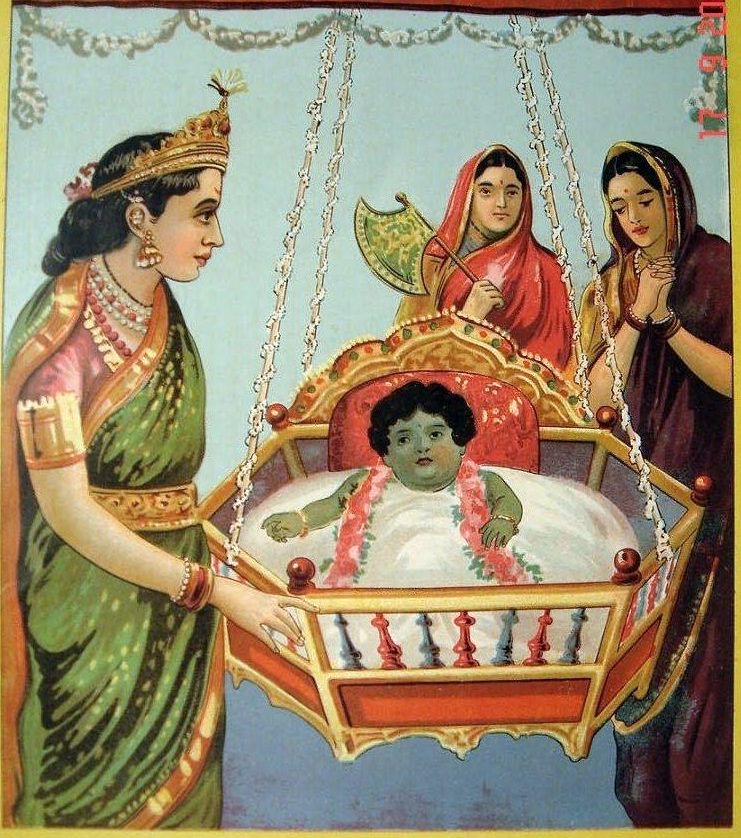
Krishna as Bal Gopal
Yashoda’s child who steals butter and dances on Kaliya teaches that divinity can be approached with laughter and love, not fear alone.
जन्माष्टमी
Janmashtami: meaning, story frame, and practical celebration notes for home and temple — written for clear learning across India and the diaspora. Janmashtami: meaning, story frame, and practical celebration notes for home and temple — written for clear learning across India and the diaspora. Krishna’s birth night — fasting, midnight aarti, and the play of the child-god.
जन्माष्टमी मथुरा की कथा और ब्रज की बाल लीला का उत्सव है। भक्त अर्धरात्रि तक जागते हैं, माखन–मिष्ठान चढ़ाते हैं, और उस रक्षक की कथा गाते हैं जो आगे गीता सुनाते हैं।
Janmashtami is observed in Hindu calendars as a day (or season) that renews a specific devotional intent — gratitude, vow-keeping, seasonal change, or remembrance of a deity’s deed. On TirthaYatra we explain the meaning in plain language so home practitioners and temple visitors share a common frame before rituals begin. Janmashtami celebrates the birth of Krishna in Mathura’s prison narrative and his childhood in Braj. Devotees stay awake until midnight (or the local temple’s announced hour), offer butter and sweets, and sing of the playful protector who later teaches the Gita. Exact tithi and regional names vary; use a trusted panchang for your city, then follow the custom of your family or temple. The spiritual thread is continuity: marking sacred time with awareness rather than rushing through empty form.
कंस को भय था कि देवकी का आठवाँ पुत्र उसका अंत करेगा। उसने दंपति को कारागार में डाला। तूफानी रात कृष्ण जन्म हुए — द्वार खुले, यमुना बंटी, वसुदेव बालक को गोकुल ले गए। अत्याचार ईश्वर को नहीं बाँध सकता।
Traditional tellings linked to Janmashtami usually connect a deity’s compassion, a devotee’s vow, or a cosmic episode remembered through epic and Puranic memory. Households retell a short version before lamp-lighting or fasting; temples may stage longer katha, bhajan, or drama. Kamsa, warned that Devaki’s eighth child would end him, imprisoned Devaki and Vasudeva and killed their earlier children. On a storm-lashed night, Krishna was born. Doors opened, the Yamuna parted, and Vasudeva carried the infant to Gokul, exchanging him with Yashoda’s daughter. The birth story is a thriller of grace: tyranny cannot lock away the Divine. Versions differ by region and lineage. TirthaYatra’s retelling is an original learning summary for cultural understanding — not a verbatim scripture reprint, and not a substitute for your family priest or temple board.
कृष्ण अनेक परंपराओं में विष्णु के पूर्ण अवतार हैं — बाल लीला के माखनचोर और आगे गीता के उपदेष्टा। जन्माष्टमी दोनों मुख लिए हुए है।
Mythologically, Janmashtami sits inside wider Hindu sacred geography and time: deities, avatars, and seasonal goddess cycles that communities map onto the lunar calendar. The same festival can emphasise different deities or local heroes depending on state, language, and sampradaya. Krishna is Vishnu’s complete avatar for many Vaishnava schools — butter thief and flute player in childhood, friend of the Pandavas and speaker of the Bhagavad Gita in maturity. Janmashtami holds both faces: the infant who makes the universe fit in a palm, and the teacher of yoga and dharma. What stays stable is the ethic: purify intention, honour the deity associated with the day, share prasadam or charity where custom allows, and keep vows without harming health or neighbours.
Yashoda’s child who steals butter and dances on Kaliya teaches that divinity can be approached with laughter and love, not fear alone.
Parents who endure prison for dharma’s sake model courage; their trust becomes the channel for the avatar’s entry into the world.
Foster parents of Gokul receive the Lord as their own — a reminder that love, not only bloodline, makes a home sacred.
विश्व भर के इस्कॉन और सामुदायिक मंदिर अर्धरात्रि अभिषेक और कीर्तन रखते हैं। दूर होने पर कई परिवार मंदिर आरती ऑनलाइन देखते हैं।
Outside India, Janmashtami is often adapted to weekend schedules, school calendars, and community hall bookings. Associations in the USA, UK, Canada, Gulf, and Southeast Asia host evening programs so working families can participate after office hours. ISKCON and community temples worldwide hold midnight abhishek and kirtan. Diaspora families often stream temple aarti if the local centre is far. For children, costume plays of Krishna’s childhood are popular at weekend programmes. The useful diaspora habit is planning early: confirm temple parking, footwear rules, and whether the evening is family-open or ticketed cultural show — then keep the devotional core (story, lamp, gratitude) even if the scale is smaller than in India.
Save this festival to My Board to track ticks there.
Janmashtami: meaning, story frame, and practical celebration notes for home and temple — written for clear learning across India and the diaspora. Janmashtami: meaning, story frame, and practical celebration notes for home and temple — written for clear learning across India and the diaspora. Krishna’s birth night — fasting, midnight aarti, and the play of the child-god.
Fast until midnight aarti (or temple timing), then prasad Decorate a jhula / cradle for Bal Krishna at home or temple Sing Krishna aarti, bhajans, and read Janmashtami vrat katha Dahi Handi in some communities (often on the following day) Read or hear a short katha suited to the day Keep a simple sattvic meal plan if…
Mythologically, Janmashtami sits inside wider Hindu sacred geography and time: deities, avatars, and seasonal goddess cycles that communities map onto the lunar calendar. The same festival can emphasise different deities or local heroes depending on state, language, and sampradaya. Krishna is Vishnu’s complete avatar…
Help us validate this page: suggest a correction, add a detail, or highlight something useful for home puja readers.
Feedback is emailed to TirthaYatra for editorial review. It is not published live automatically (safer for quality and ads policy). You can also keep a personal copy on this device.