Surya
Sandhya and Usha arghya — sunset and sunrise offerings — place Surya at the centre of household gratitude.
छठ पूजा
Chhath Puja: meaning, story frame, and practical celebration notes for home and temple — written for clear learning across India and the diaspora. Chhath Puja: meaning, story frame, and practical celebration notes for home and temple — written for clear learning across India and the diaspora. Four days of rigorous sun worship — clean rivers, standing arghya, and gratitude to Surya and Chhathi Maiya.
छठ दीपावली के बाद सर्वाधिक खोजी जाने वाली परंपराओं में है — बिहार, झारखंड, पूर्वी उत्तर प्रदेश और प्रवासी बस्तियों में। सूर्य और छठी मैया के प्रति आभार का बहु–दिवसीय व्रत।
Chhath Puja is observed in Hindu calendars as a day (or season) that renews a specific devotional intent — gratitude, vow-keeping, seasonal change, or remembrance of a deity’s deed. On TirthaYatra we explain the meaning in plain language so home practitioners and temple visitors share a common frame before rituals begin. Chhath is one of India’s highest-intent search festivals after the Diwali cluster, especially in Bihar, Jharkhand, eastern Uttar Pradesh, and among migrant communities worldwide. Devotees thank Surya and Chhathi Maiya for life, children, and healed hardship through a multi-day discipline of purity, fasting, and riverbank arghya at sunset and sunrise. Exact tithi and regional names vary; use a trusted panchang for your city, then follow the custom of your family or temple. The spiritual thread is continuity: marking sacred time with awareness rather than rushing through empty form.
परंपरा में छठी मैया बच्चों की रक्षिका और सूर्य प्राणदाता हैं। महाभारत स्मृति में द्रौपदी–पांडव सूर्य की शरण लेते हैं; राम वंश भी सूर्य का सम्मान करता है। जल में खड़े अर्घ्य — भक्त धरती और ज्योति के बीच अक्ष बनता है।
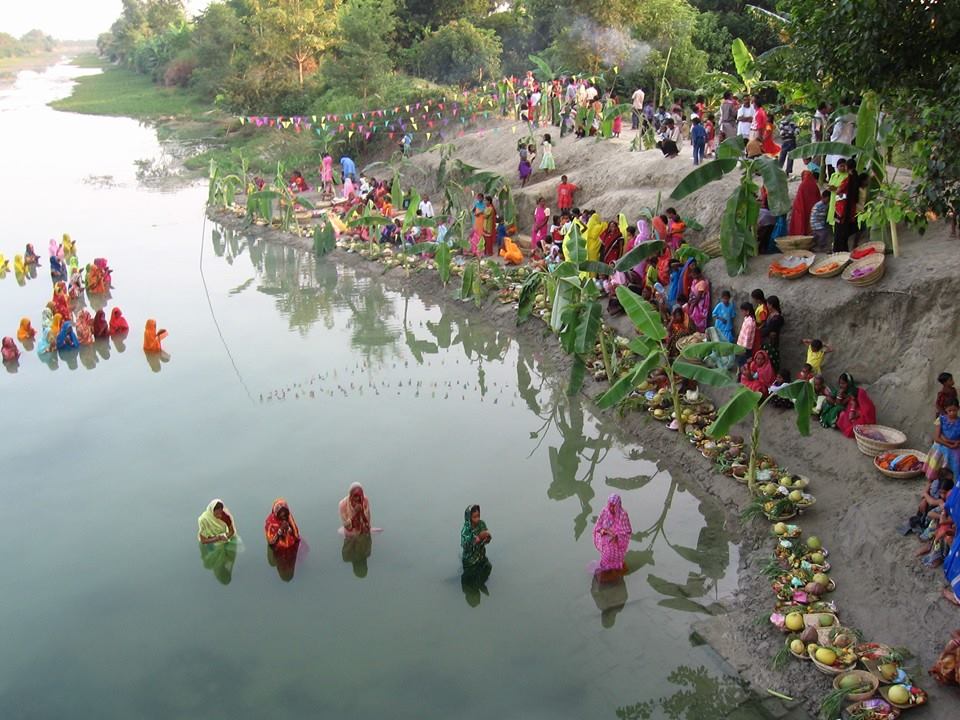
Traditional tellings linked to Chhath Puja usually connect a deity’s compassion, a devotee’s vow, or a cosmic episode remembered through epic and Puranic memory. Households retell a short version before lamp-lighting or fasting; temples may stage longer katha, bhajan, or drama. Tradition remembers Chhathi Maiya (often linked with Shashthi / forms of Prakriti) as guardian of children and childbirth, and Surya as the visible giver of prana. Epic memory also recalls Draupadi and the Pandavas turning to the Sun for relief in exile, and Rama’s line honouring Surya. The standing offering in water — body aligned to the setting and rising sun — is the festival’s unmistakable mythic posture: the devotee becomes a living axis between earth and light. Versions differ by region and lineage. TirthaYatra’s retelling is an original learning summary for cultural understanding — not a verbatim scripture reprint, and not a substitute for your family priest or temple board.
छठ की कथा स्वच्छ जल पर टिकी है। ठेकुआ आदि नैवेद्य सात्त्विक; व्रत कठोर आभार है, सौदेबाजी नहीं। विदेश में झील–सरोवर पर अनुमति संग ‘घाट’ बनते हैं।
Mythologically, Chhath Puja sits inside wider Hindu sacred geography and time: deities, avatars, and seasonal goddess cycles that communities map onto the lunar calendar. The same festival can emphasise different deities or local heroes depending on state, language, and sampradaya. Unlike many home pujas, Chhath’s mythology insists on ecological purity: the river or pond must be clean enough to stand in. Thekua and other naivedya are prepared without onion–garlic, and the vow’s severity (including periods without water) is framed as thanksgiving, not bargaining. Abroad, devotees recreate ghats at lakes and designated water bodies with municipal permission. What stays stable is the ethic: purify intention, honour the deity associated with the day, share prasadam or charity where custom allows, and keep vows without harming health or neighbours.
Sandhya and Usha arghya — sunset and sunrise offerings — place Surya at the centre of household gratitude.
Invoked for children’s protection and the mother’s strength; her presence makes Chhath a family vow, not a solitary spectacle.
न्यू जर्सी–टोरंटो झीलों से दुबई–मेलबर्न तक प्रवासी छठ समितियाँ सुरक्षा और सफाई संग अर्घ्य कराती हैं — वही शुद्धता का आधुनिक रूप।
Outside India, Chhath Puja is often adapted to weekend schedules, school calendars, and community hall bookings. Associations in the USA, UK, Canada, Gulf, and Southeast Asia host evening programs so working families can participate after office hours. From New Jersey and Toronto lakesides to Dubai and Melbourne community parks, diaspora Chhath committees organise safety marshals, women’s changing tents, and eco-cleanup after arghya — a modern expression of the same purity myth. The useful diaspora habit is planning early: confirm temple parking, footwear rules, and whether the evening is family-open or ticketed cultural show — then keep the devotional core (story, lamp, gratitude) even if the scale is smaller than in India.
Save this festival to My Board to track ticks there.
Chhath Puja: meaning, story frame, and practical celebration notes for home and temple — written for clear learning across India and the diaspora. Chhath Puja: meaning, story frame, and practical celebration notes for home and temple — written for clear learning across India and the diaspora. Four days of rigorous sun worship — clean rivers, standing arghya, and gratitude to Surya and Chhathi Maiya.
Follow the four-day arc: Nahay Khay, Kharna, Sandhya arghya, Usha arghya Keep the ghat and kitchen pure; prepare thekua and seasonal fruits as naivedya Stand in clean water for sunset and sunrise offerings; sing Chhath geet Read Chhath vrat katha; end with prasad shared in humility Read or hear a short katha suited to…
Mythologically, Chhath Puja sits inside wider Hindu sacred geography and time: deities, avatars, and seasonal goddess cycles that communities map onto the lunar calendar. The same festival can emphasise different deities or local heroes depending on state, language, and sampradaya. Unlike many home pujas, Chhath’s myt…
Help us validate this page: suggest a correction, add a detail, or highlight something useful for home puja readers.
Feedback is emailed to TirthaYatra for editorial review. It is not published live automatically (safer for quality and ads policy). You can also keep a personal copy on this device.