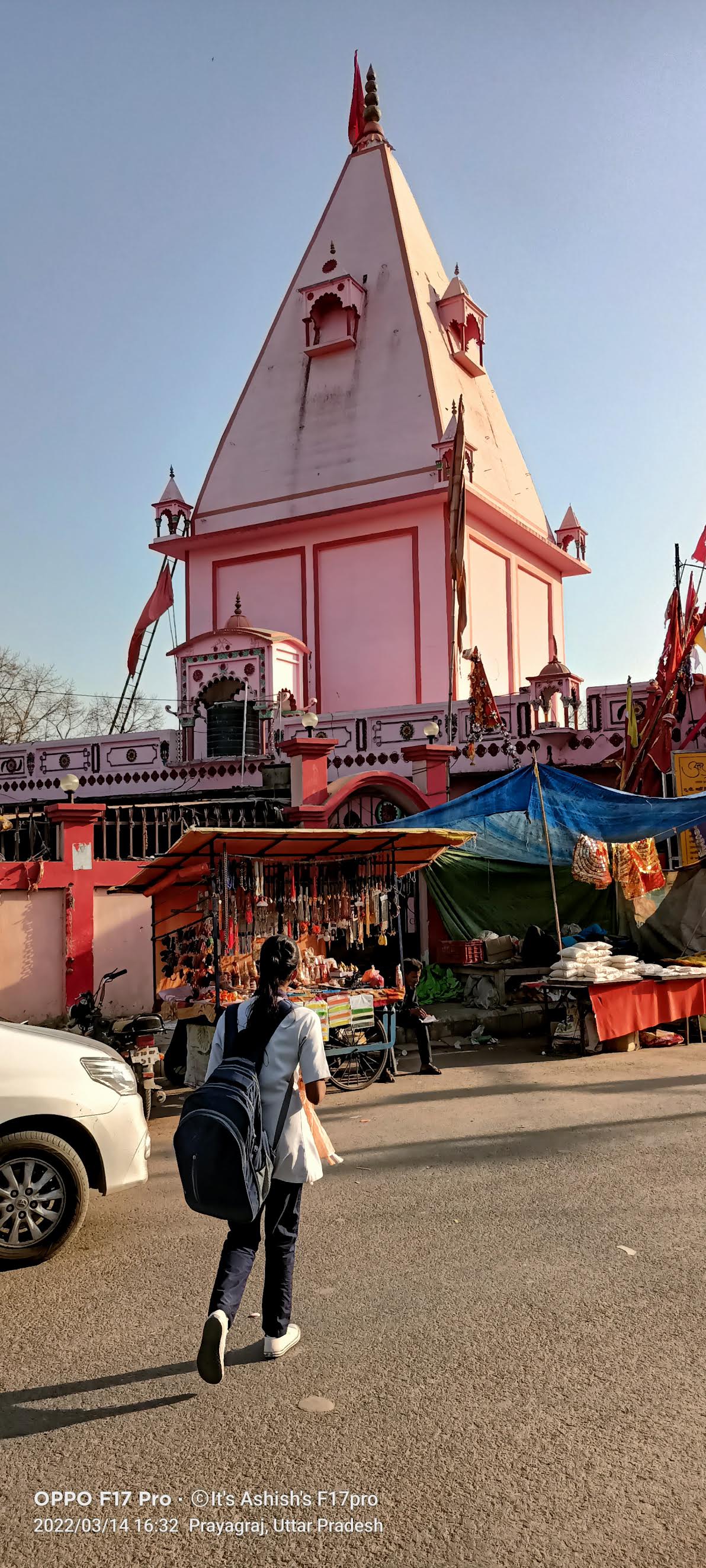
Temple Glimpse
Mythology & Significance
जय माता दी
Victory to the Mother
Common North Indian Devi pilgrim greeting at this seat
Significance in mythology
The Shakti Peetha cycle rests on the Puranic narrative of Daksha’s yajna, Sati’s self-immolation, and Shiva’s grief-stricken tandava. Vishnu’s Sudarshana chakra is said to have dismembered Sati’s body; where each portion fell, a peetha of the Goddess arose.
Alopi Devi Temple at Prayagraj, Uttar Pradesh is counted among these seats in widely followed pilgrimage lists. Tradition in the popular 51-peetha pilgrimage enumeration associates this seat with the Fingers of Goddess Sati. Scriptural enumerations differ (often 51, 52, or 108); Devi / Kalika Purana traditions and later Pithanirnaya-style lists underpin how pilgrims map this geography today.
Goddess Alopi / Lalita tradition is worshipped here as the living Shakti of the peetha — fierce or gentle according to local form, yet always as the mother who sanctifies place through the Sati–Shiva story.
Local stories & beliefs
At Alopi Devi Temple, priests and elders retell the peetha association (Fingers) as the reason devotees undertake long journeys for darshan of Goddess Alopi / Lalita tradition. Navaratri, local jatras, and family kuladevi vows intensify belief that the Goddess of this seat answers specifically here.
Offerings, colours of flowers or cloth, and animal-sacrifice customs (where still practised under temple rules) vary by region — pilgrims are taught to follow only what the local peetha permits.
Because peetha lists themselves vary, local tradition at the shrine is treated as authoritative for ritual detail, while the pan-Indian Sati narrative supplies the shared mythological frame.
Scriptural & traditional links: Puranic Sati–Daksha narrative (Devi / Kalika Purana traditions), Pithanirnaya / Shakti Peetha pilgrimage lists (enumerations vary), Local peetha sthala purana, Accounts summarised from widely cited Puranic, epic, and pilgrimage traditions; local tellings may differ.
Known for: Shakti Peetha — Fingers
Important Days, Festivals & Best Time
Festivals & sacred days
- Navaratri
- Local jatra / mela days
Watch & Learn
Orientation videos only — verify timings on official sources.
Location on Map
Pinpoint the sacred site, then plan your approach from the nearest rail or airport listed below.
Getting There, Stay & Food
Accommodation
Dharamshalas, temple-trust guest houses, and private hotels near Alopi Devi Temple. Book early for festival weeks; prefer official trust counters when available.
Local food
North Indian vegetarian thalis, kachori-sabzi styles, and temple prasadam.
Other food options
Wider vegetarian and city cuisine usually in the nearest town; keep non-veg and alcohol away from temple precincts as posted.
Nearby Places & Clubbed Packages
Same-trip places
Suggested packages
- Alopi Devi Temple — day darshan
- Alopi Devi Temple + Lete Hanuman Mandir, Prayagraj — 2-day circuit
- Regional Uttar Pradesh multi-temple circuit
Practical Darshan Details
Restrictions at gates
Follow phone, leather, and photography rules posted at the gate.
Official trust / tourism website ↗
State / board reference: Shri Kashi Vishwanath Temple ↗
Common questions · सामान्य प्रश्न
Tap any question for a fuller pilgrim brief — mythology, season, how to reach, darshan practicals, food, and how to verify on official channels. Schedules change; always confirm before travel.
What is Alopi Devi Temple known for?
Shakti Peetha — Fingers. Alopi Devi Temple is counted among the 51 Shakti Peethas. Tradition associates this seat with the Fingers of Sati.
Where is Alopi Devi Temple located?
Prayagraj, Uttar Pradesh, India
Who is worshipped at Alopi Devi Temple?
Goddess Alopi / Lalita tradition
What is the mythological significance of Alopi Devi Temple?
The Shakti Peetha cycle rests on the Puranic narrative of Daksha’s yajna, Sati’s self-immolation, and Shiva’s grief-stricken tandava. Vishnu’s Sudarshana chakra is said to have dismembered Sati’s body; where each portion fell, a peetha of the Goddess arose. Local memory also notes: At Alopi Devi Temple, priests and elders retell the peetha association (Fingers) as the reason devotees undertake long journeys for darshan of Goddess Alopi / Lalita tradition. Navaratri, local jatras, and family kuladevi vows intensify belief that the Goddess of this seat answers specifically here. Offerings, colours of flowers or cloth, and animal-sacrifice customs (where still practised under temple rules) vary by region — pilgri…
When is the best time to visit Alopi Devi Temple?
Best time: October–March; summers are hot on the plains.
Climate: Gangetic plains — hot summers, cool winters, monsoon mid-year.
Carry: Sun cap and light cotton for hot plains. Modest clothes, ID proof, water, and offline maps.
Festival weeks and weekends are busier — leave buffer for queues and parking.
How do I reach Alopi Devi Temple?
Nearest rail: See regional railhead; confirm current connectivity.
Nearest airport: Nearest major airport with road onward.
Map search tip: Alopi Devi Temple.
Last-mile roads, seasonal closures, and local transport change — confirm before you set out.
Which festivals are important at Alopi Devi Temple?
Widely noted observances linked to this shrine include: Navaratri, Local jatra / mela days.
Exact dates follow the lunar / temple calendar and can shift each year. Use the temple’s official notices for the final schedule.
What should visitors know for darshan at Alopi Devi Temple?
Dress code: Modest attire — shoulders and knees covered preferred. Follow temple boards for traditional dress, footwear, and phone rules.
Darshan timings: Typically early morning to evening with aarti and ritual breaks. Confirm same-day timings on the temple trust / endowment board notices.
Special entry / passes: Special entry, if any, only via official temple counters.
Gate restrictions: Follow phone, leather, and photography rules posted at the gate.
Lockers / cloakroom: Cloakrooms where available near the entrance.
Phone, leather, and photography rules are set by the temple board — follow what is posted at the gate.
Sources & Updates
- Shri Kashi Vishwanath Temple: https://www.shrikashivishwanath.org/
- Temple trust / local administration notices
- State tourism materials
- Puranic / pilgrimage tradition (lists can vary by scripture)
- UP Tourism: https://uptourism.gov.in/
Photo: आशीष भटनागर · CC0 · Wikimedia Commons
Last updated: 2026-08-09. Lists and ritual details can vary by tradition. Verify before travel.
Feedback · सुधार
Help us validate this page: suggest a correction, add a detail, or highlight something useful for home puja readers.
Feedback is emailed to TirthaYatra for editorial review. It is not published live automatically (safer for quality and ads policy). You can also keep a personal copy on this device.